Upper Mustang and Manang aren’t just destinations—they are experiences that reset your soul.
Upper Mustang, often called the Last Forbidden Kingdom, feels like stepping into another world. Its desert-like landscapes, red cliffs, hidden caves, and centuries-old Tibetan culture create a powerful sense of timelessness. Sacred monasteries, chortens, and the walled city of Lo Manthang carry deep spiritual energy. The isolation and raw terrain strip away distractions, allowing you to reconnect with yourself on a deeper level.
Manang sits high in the Annapurna range, surrounded by dramatic peaks, glacial rivers, and vast alpine valleys. Life here moves slowly, in harmony with nature. Crystal-clear air, prayer flags fluttering in the wind, ancient monasteries, and long walking trails invite you to pause, breathe, and reconnect. The quiet beauty of Manang helps calm the mind, reduce stress, and bring mental clarity—perfect for reflection and inner balance.
In this blog, Travelinkedd describes the essential tour guide and explains why the Upper Mustang and Manang tour is so healing. If you are interested, please scroll down and read the complete blog.
Upper Mustang and Manang Tour Essential Guide
Permit’s Regulation
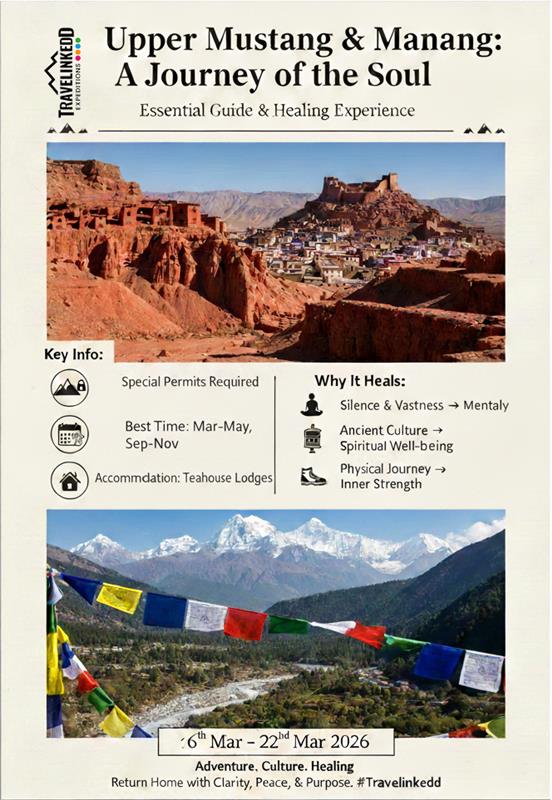
The first thing you should know is that Upper Mustang is a restricted area, so a special permit and a licensed guide are required. In contrast, Manang only needs standard trekking permits like ACAP and TIMS.
Perfect Time to visit Upper Mustang & Manang
The best seasons are from March to May and from September to November, offering clear skies, stable weather, and stunning views.
Accommodation & Food
You can expect basic but comfortable teahouse lodges for accommodation. Meals usually include local Nepali cuisine along with some basic international dishes.
Packing Essential
Make sure to carry warm clothes, sunscreen, a reusable water bottle, and any necessary medications for traveling in high-altitude regions.
Why the Upper Mustang and Manang Tour Is So Healing
-The altitude and pure Himalayan air refresh your body
-The silence and vastness calm the nervous system
-The ancient Buddhist culture and sacred sites nurture emotional and spiritual well-being
-The physical movement and adventure release stress and awaken inner strength
-Being far from crowds and technology restores clarity and perspective
This expedition isn’t about ticking places off a list—it’s about slowing down, grounding yourself in nature, and rediscovering freedom, resilience, and peace.
🗓 6th Mar – 22nd Mar 2026
Adventure. Culture. Healing.
Let Manang & Upper Mustang change the way you see the world—and yourself.
Conclusion
Ultimately, Upper Mustang and Manang aren’t just places you visit—they are places you feel. This journey invites you to slow down, breathe deeply, and return home with a renewed sense of clarity, peace, and purpose.
If you found this blog helpful, feel free to share it with your friends or family who are interested in traveling to Manang or Upper Mustang.
FAQ
Why is the Upper Mustang so expensive?
As the Upper Mustang area has been labeled a restricted region by the Government of Nepal, a special permit is required to travel there and solo trekking is not allowed. In addition, logistical challenges and higher costs arise due to the need for a licensed guide, and the remoteness of the region further increases the overall cost of the Upper Mustang Tour.
How many days for Upper Mustang & Manang?
Travelinkedd’s Upper Mustang tour takes 9 days and covers top attractions like Marpha, Muktinath Temple, Dumba Lake, and ancient monasteries.
The Manang tour takes 11 days and features spectacular landscapes, from lush green valleys to rugged high-altitude deserts.
Can Indians go to Upper Mustang?
Absolutely Indian’s can go to Upper Mustang. Specially Indian does need any visa to enter Nepal. Indian’s just need the permit to enter the restricted area of Upper Mustang.
